

Gerd Leonhard
Gerd Leonhard & Jo Caudron Podcast on the Future of Europe: Innovation, Sovereignty and Humanity - Gerd Leonhard
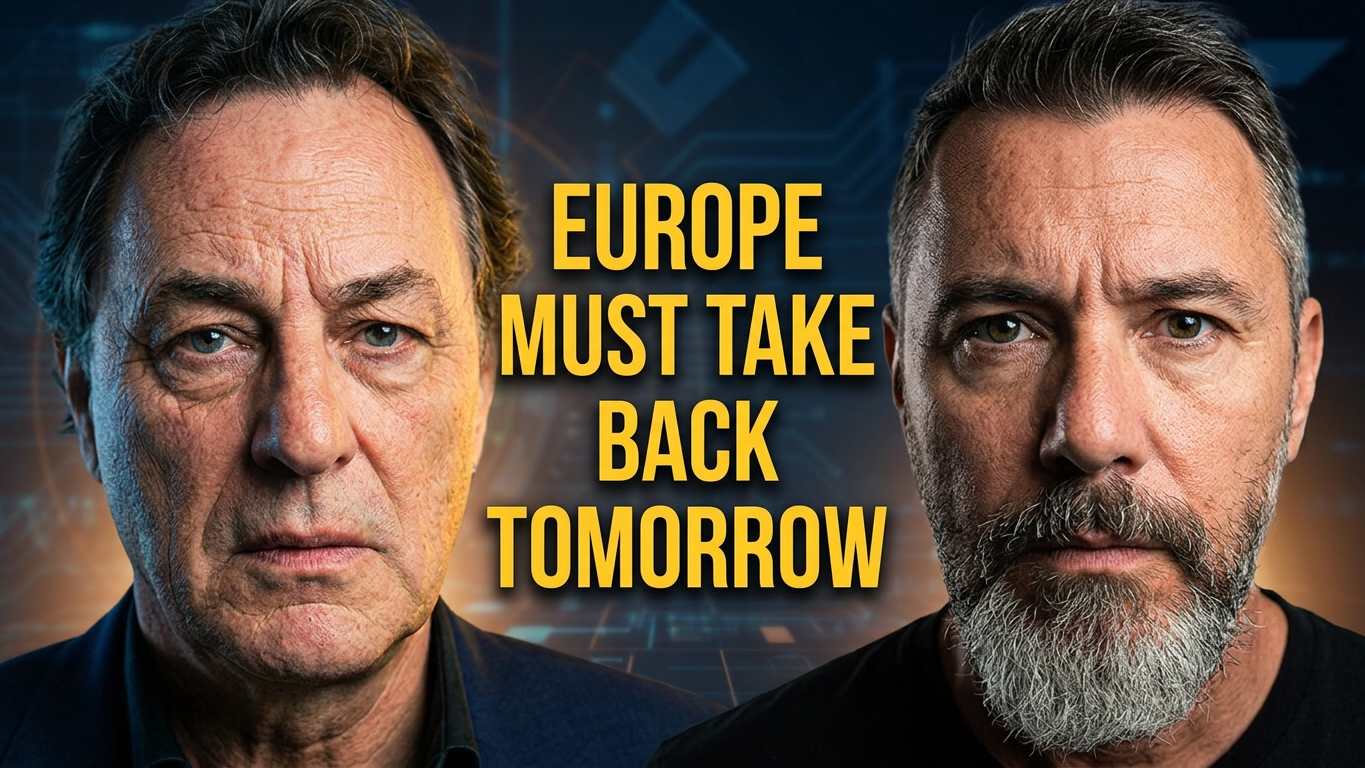
A riveting conversation with #futurist and #publicthinker Gerd Leonhard and the Belgian digital innovation leader, thinker and author Jo Caudron, about The Future of Europe, covering AI, Digital Sovereignty and the concept of #takingbacktomorrow, as well as Jo's new book "F*CK the System and Other Bad Ideas for the Future" see https://www.jocaudron.com/ftsbook
Below: Gerd Leonhard & Jo Caudron Conversation July 28, 2026

02:16

YouTube
From Digital Transformation to Humanity's Survival: We must speak about what Really Matters
This is an excerpt from the new episode of #gerdtalks, a riveting conversation with fellow #publicthinker Jo Caudron which is now live exclusively on my new GerdTV platform: https://www.gerd.tv/programs/reviving-europe-leonhard-caudron. FREE ACCESS (only email is required), plus dubs in 5 languages and free PDF downloads. Please join us there:) In this excerpt, we discuss how our work has shifted from straightforward business and digital transformation topics to more personal and often more e
A wide-ranging conversation between two veteran digital thinkers — Jo Caudron (founder of Belgium's first web agency, 7 books, 30+ years in digital disruption) and Gerd Leonhard — on Europe's identity, AI's role in society, and what it means to fight for a human future.
Shifting Focus
Both Gerd and Jo have moved from business transformation to fundamental questions about humanity's future — from "how to use AI for sales" to "what do we want from AI and Europe?"
"F*CK the System"
Caudron's new book addresses what's happening globally (Trump is a symptom, not the cause); Europe's weaknesses; and a new innovation paradigm — not competing the old way, but a different approach entirely.
Digital → Societal
Caudron notes digital was displaced as the top disruptor by aging populations, housing, and climate — until AI returned it to prominence. Societal factors now drive transformation alongside technology.
Boardroom Gap
CEOs agree on geopolitics, climate, and AI risk — but stakeholder constraints prevent translating awareness into corporate strategy. Agreement in the boardroom rarely becomes action.
Growing Awareness
A year and a half ago, Caudron's broader-societal workshops met resistance. Today, most audiences accept that the current state of the world is not normal — a silver lining.
"For the Human Future"
Leonhard has rebranded his work from "For the Human Business" to "For the Human Future" — pivoting from keynote 'service provider' to advocate. The key question is now "What do we want?" not "What can we have?" — especially for Europe vis-à-vis American tech.
AI & Prediction
AI tools like Futuresearch.com now handle forecasting and analytics. Clients arrive with AI-generated scripts. Gerd usually declines to follow them — the human voice and judgment remain irreplaceable.
Europe: Teenager, Not Sick Old Man
Caudron's metaphor: Europe has been dependent for decades — now the US is withdrawing support and demanding Europe adopt a more conservative stance. Like a teenager forced to become self-reliant, Europe must discover its own capabilities.
Strong Foundations, Wrong Choices
Europe's academia, talent, and innovation remain strong (ASML, ETH Zurich, EPFL). Two past mistakes: outsourcing manufacturing to China and following US funding for market access. The building blocks never left.
Mindset Problem
Leonhard: Europe has the components but suffers a cultural and attitudinal problem — intellectual laziness, risk aversion, unwillingness to do extra work. Cultural change requires a painful moment, like Germany's collapsing car industry.
USofE Rising
Trump's Greenland comments and the US "divorce" have spurred rapid Euro-nationalistic feeling. The perception of European weakness is changing — quickly. Caudron sees this as a positive development.
EU as Market Project → EU State/Federation Project
Europe must transition from a "market project" to a United States of Europe state project — pooling sovereignty, not abandoning it. Switzerland's canton model offers a blueprint. A dedicated Pan-EU "Minister of the Future for Europe" is urgently needed.
The AI Question: Which Race Should Europe Run?
Not the Arms Race
The race for AI dominance — economic, military, AGI supremacy — is the wrong one. Like a nuclear weapon, a true AGI superpower could never be used. China would never allow an AI that threatens its own power.
The Application Race
Europe's race: best use of AI across society and economy. Stop investing billions in frontier models marginally behind OpenAI. Focus on implementation — aging population, low productivity, education, smarter military command.
Transition Sectors
Energy as technology (solar, wind, tidal), protein transition in food, autonomous shared mobility, defense transformation. Europe invests in talent and market introduction — the US has stepped out of this game.

The comingClash of Civilizations: Human Future vs. Transhumanism
Leonhard foresees an inevitable clash between transhumanists/singularity proponents (US-backed) and Europe's vision of a human future. Europe does not want AI as a god or person — only as a well-controlled agent or tool. This is a clash of civilizations: US techno-optimism, Chinese state capitalism, and European humanism.
Caudron frames it as a transversal battle — not East vs. West, but those who want a dystopian future vs. those who don't. Even many Trump supporters oppose Silicon Valley's radical transhumanist agenda. Protests against AI CEOs in the US prove these proponents don't represent the broader population.
Europe's Missing Narrative & Practical Sovereignty
No Thought Leaders, No Strong Stories
Europe lacks widely recognized public intellectuals who can shape thinking across borders. Language barriers and dispersion fragment the intellectual landscape. Caudron: European institutions are good at architecture and legislation but "suck at storytelling."
European Social Media
Caudron proposes "Europe Online" — a platform led by existing European media companies, reverse-engineering popular features, leveraging media reach to break Facebook/TikTok dominance within a year.
Copy-Back Strategy
American companies copied European platforms (e.g., Netlog). Europe should do the same — NextCloud + ProtonMail already replace Microsoft/Google. Government adoption and free alternatives like OpenOffice will drive the transition.
"I Love the Future"
Leonhard's campaign: narrative precedes reality. Europe needs to fall in love with its future — a positive vision to counter populism and inspire younger generations. "Taking Back Tomorrow" as a rallying cry.
RELATED VIDEOS and links


Gerd Leonhard Futurist Humanist Author Keynote Speaker
Re-branding the future: A special guest post by Chris Nolan; The Good Future Project
In 1975, New York was a crime-ridden nearly bankrupt metropolis with garbage piling up on sidewalks. It certainly wasn’t a tourist destination but more akin to the dark dystopian Gotham City that inspired the Batman movies.


Could Europe learn to Love The Future?